
Prostate Artery Embolization (PAE) vs. Surgery: What Patients Need to Know
Compare PAE to traditional prostate surgery for BPH. Learn about the minimally invasive alternative that preserves sexual function.
Reviewed by VIS clinical team Last reviewed: May 2026
What is Prostate Artery Embolization?
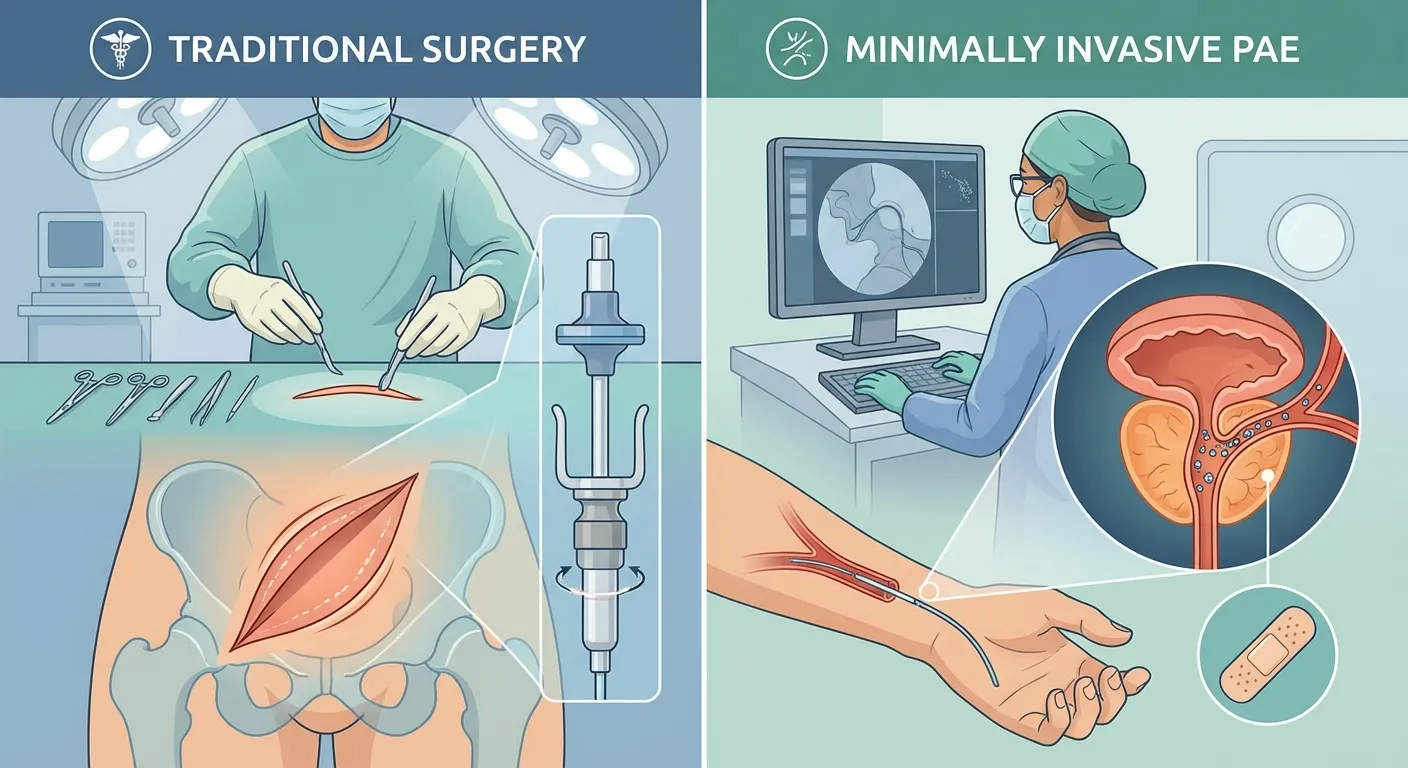
Prostate Artery Embolization (PAE) is a minimally invasive procedure that treats benign prostatic hyperplasia (BPH) — an enlarged prostate — by reducing blood flow to the prostate gland. This causes the prostate to shrink, relieving urinary symptoms without traditional surgery.
PAE vs. TURP Surgery: Side-by-Side Comparison
Procedure
- PAE: Catheter inserted through a tiny wrist or groin puncture; microscopic particles block prostate blood supply
- TURP: Surgical instrument inserted through the urethra to cut away prostate tissue
Anesthesia
- PAE: Local anesthesia with conscious sedation
- TURP: General or spinal anesthesia
Hospital Stay
- PAE: Same-day outpatient procedure — go home the same day
- TURP: Typically 1-3 days in the hospital with a catheter
Recovery
- PAE: Most patients return to normal activities within 3-5 days
- TURP: 4-6 weeks before full recovery; activity restrictions for several weeks
Sexual Function
- PAE: Preserves sexual function in the vast majority of patients
- TURP: Risk of retrograde ejaculation (up to 75% of patients)
Effectiveness
- PAE: Significant symptom improvement in 80-90% of patients
- TURP: Considered the gold standard with high success rates
Who Should Consider PAE?
PAE may be ideal if you:
- Want to avoid surgery and general anesthesia
- Are concerned about preserving sexual function
- Have a very large prostate (PAE works well on larger prostates)
- Have medical conditions that make surgery risky
- Want minimal downtime and quick recovery
Schedule a Consultation
Our interventional radiologists can help you determine whether PAE is the right treatment for your enlarged prostate. Contact us or call (605) 217-5617.